Why the One-Hour Concert Feels Like a Gift
What some concert planners (mis)understand about time, cost, and audience care.
I’ve been thinking about time lately, not about tempo markings and such, but in the very practical sense of sitting in a concert hall. In Italy, I’ve found myself leaving orchestral concerts after an hour feeling nourished, alert, and somehow… respected as a concert-goer.
Back in the UK, we’re more often faced with two-hour programmes that appear generous on paper, certainly, but not always quite so generous in experience perhaps. And I’m beginning to wonder whether our idea of ‘value’ has quietly gone astray.
Attention is not endless. An hour asks something focused of us. Two hours asks a little endurance. There’s a quiet honesty in a shorter programme: this is what we have to say tonight. No padding, no obligation to ‘fill out’ the evening. By contrast, longer programmes, often built from a sequence of well-known works, can start to feel like a checklist. Recognition replaces curiosity, and then attention can begin to drift.
It’s not that the music isn’t wonderful. It’s that our capacity to receive it isn’t infinite, even as someone who has extensive experience on both sides of, and on the podium!
I’ve been very lucky, over the years, to work with community orchestras and their audiences. In those spaces, there’s often an “anything goes” spirit. Programmes that are less tightly controlled, sometimes unexpected, and occasionally even risky. And time and again, the audience steps up. Not with resistance, but with curiosity, and often with openness. The kind that reminds you people are far more receptive than we assume.
It’s made me question a quiet industry habit: the idea that audiences need to be carefully guided through familiarity. Because in my experience, they don’t.
They need to be invited.
Value is not measured in minutes - we’ve absorbed the idea that longer equals better value for money. But live music isn’t a buffet. A single, well-shaped hour, played with clarity, intention, and presence, can feel far more ‘worth it’ than an overextended evening where listening becomes passive.
Value might be better measured in attention held, not time filled.
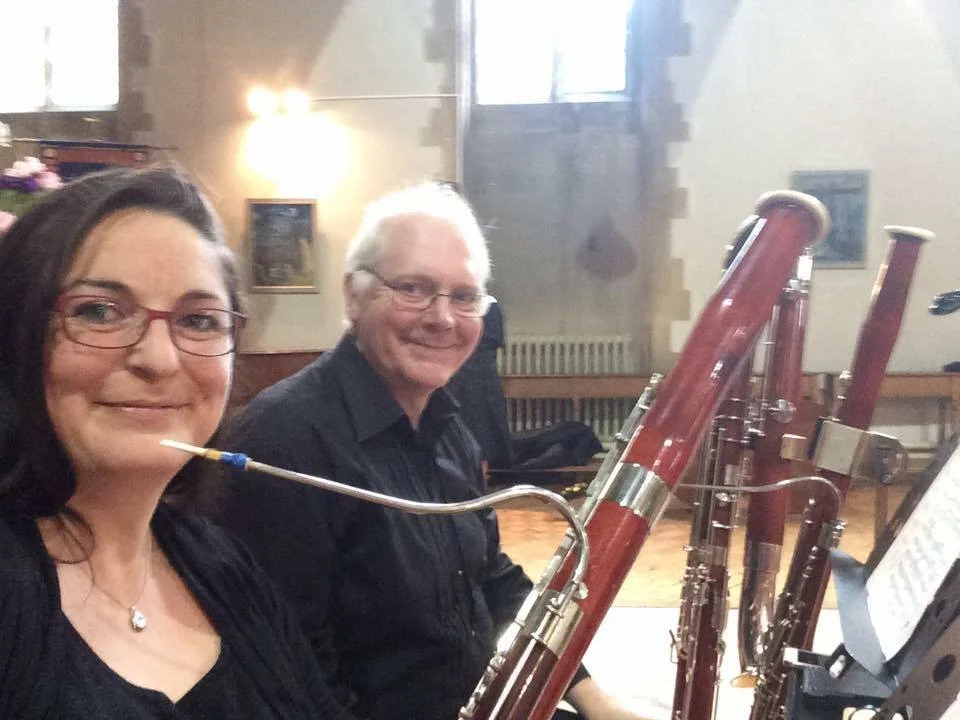
I’ve always said the best seat in the house is second bassoon’s!
Of course, the UK context is different. Running an orchestral concert here is expensive: the venue hire, the musicians fees, transport and logistics, marketing and administration…
The pressure to offer more for a higher ticket price is real and understandable. But it raises an uncomfortable question: If costs are higher, is the answer really to make concerts longer and more familiar?
Or does that risk reinforcing a model that feels safe but isn’t actually growing audiences?
There’s a risk that in trying to justify the price, we unintentionally dilute the experience. Of course, context shapes everything and in Italy, an 8pm start makes perfect sense. You wait for the heat to soften, the day to ease its grip. The concert becomes part of the evening’s unfolding - a natural continuation of being outside, of gathering, of staying present.
It’s not just a scheduling choice. It’s a response to climate, to rhythm, to how people actually live.
In the UK, the context is different. A Saturday night concert can sometimes ask quite a lot: a drive out, often to a church or hall at a rural venue, an earlier start, a ticket price that edges past £20.
None of these things are unreasonable in themselves. But taken together, they shape the feeling of the invitation. And then, of course, there’s the seating. In many UK venues, particularly churches, we find ourselves perched on pews or tightly interlocked chairs, arranged with admirable efficiency and very little generosity of space.
At a certain point in the evening, attention begins to compete with circulation.
You become aware (acutely) of your left leg. Or your right. Or the precise point at which the wooden pew meets your spine. There is often a moment (usually somewhere in the second half) where a small, necessary adjustment is attempted.
A subtle shift of weight. A careful redistribution. And yet somehow, this modest movement travels. Down the length of the pew. Into the architecture. Announced, inevitably, by a quiet but unmistakable creak.
At which point you realise that not only can you not quite see the players properly, but that you are now part of the performance (Added percussion!), but there’s a particular kind of British politeness in pretending none of this is happening.
It’s hard to remain fully absorbed in the music when your body is negotiating its own quiet survival. Which brings us back, perhaps, to a simple question:
Does this feel easy to say yes to?
Or does it begin to feel like something we have to work to attend and then stay the course for?
Who are we designing for?
Looking at many UK programmes, I’m struck by how often they lean on the same repertoire, the same “classics” presented in extended formats. These programmes reliably attract an existing audience. But do they invite a new one?
If we want concerts to feel accessible, not just financially, but socially and energetically, we might need to rethink the shape of the invitation itself. An hour is easier to say yes to. It fits around work, childcare, energy levels, curiosity.
It lowers the threshold without lowering the artistic bar.
There’s also something about the form of UK concert programming that’s worth naming. The overture–concerto–symphony structure appears again and again, as if it were a kind of unspoken rule. It’s familiar. It works. It reassures.
But it can also become automatic.
And when form becomes habit, we stop asking whether it’s actually serving the music, or the audience, on a given evening. I sometimes notice a smaller-scale work placed at the opening almost as a formality. Occasionally, even a Mozart symphony appears in that slot, treated, effectively, as a kind of extended overture and very often glossed over.
But a Mozart symphony is anything but a curtain-raiser. In the right hands, it can feel immediate, volatile, even seat-of-the-pants in its energy and that’s music which asks for full attention, not polite reception while we settle in.
When we compress works like that into functional roles within a fixed programme structure, something of their vitality is lost, it seems to me.
And perhaps something of the audience’s experience is flattened too.
I’m reminded, as I write this, of a concert Miles and I put on when we first formed our own orchestra. We made a deliberate decision: a shorter programme, no ticket charge, and (thanks to some funding) the ability to bring in professional players alongside a wonderful group of amateur and semi-professional musicians.
The hall was full.
It’s stayed with me because it challenged an assumption I think we often carry that more music, higher prices, and longer evenings are what make something feel valuable.
That night didn’t feel like that. It felt focused. Welcoming. Enough. Shorter concerts don’t feel like less. They feel considered.
There’s a different quality of presence when everyone in the room (on stage and off) knows the arc is contained. That attention matters. That it won’t be stretched past its natural life. It feels, quite simply, like care and perhaps generosity in concert programming isn’t about giving more.
Perhaps it’s about giving just enough, with clarity, intention, and trust in the audience’s capacity to meet it.
The best concerts I’ve attended recently haven’t been the longest, or the most crowded with repertoire. They’ve been the ones that offered just enough.
What makes a concert feel truly “worth it” to you?
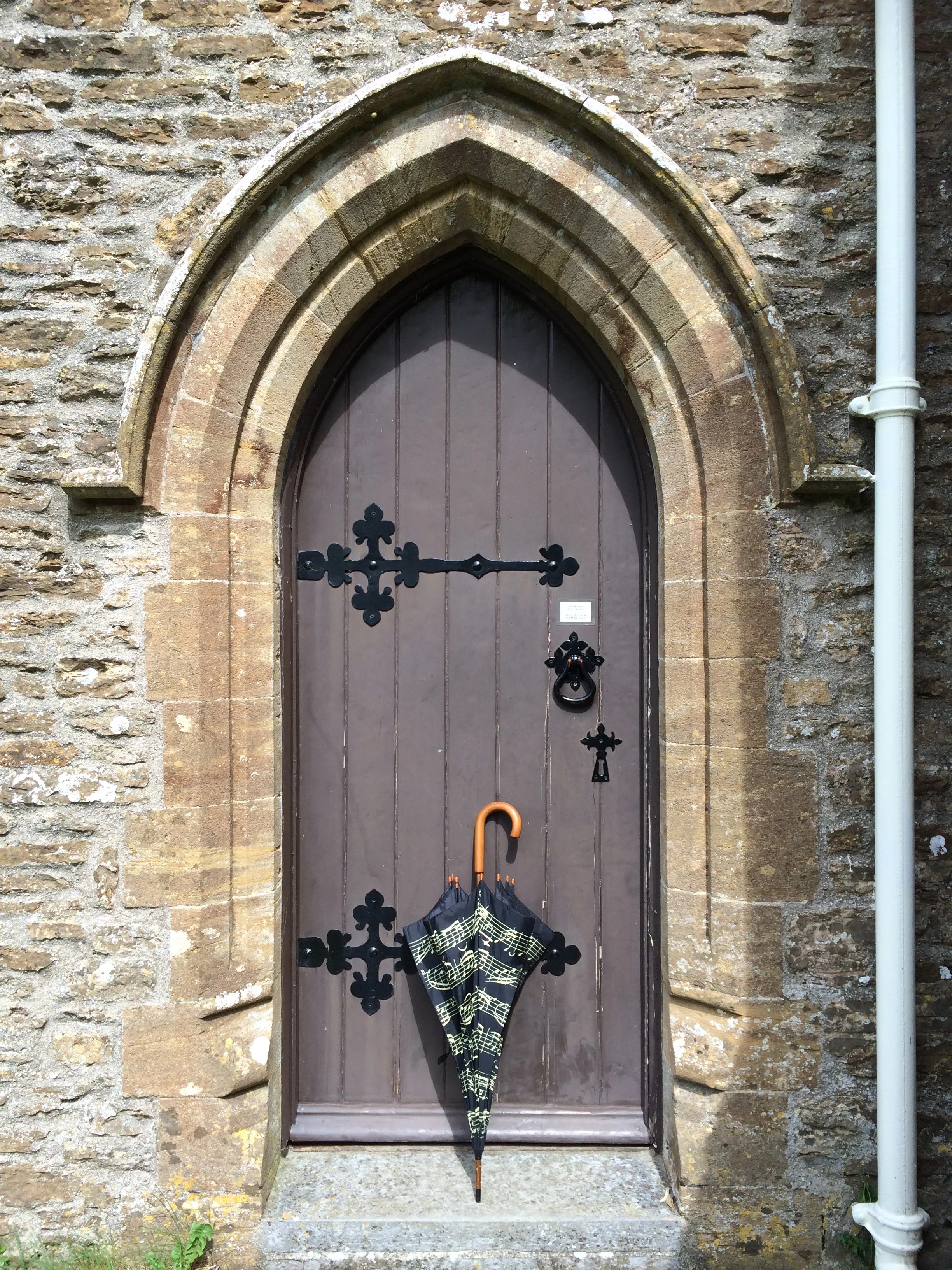
The Wandering Winds trusty umbrella on tour in rural Dorset