Gardens Against the Water: notes from Venice
Hidden gardens, enclosed light, and moments of stillness in Venice
When the wisteria first comes into bloom in Venice, we know that our own small, twisted stem – curling itself around the corner of our courtyard at home in North Wales – will follow, about two weeks behind. There is something in that delay that feels like an echo rather than a difference.
Our courtyard walls, painted in a warm, dusky terracotta, hold the light in a way that reminds us of Venetian render. We have gathered an eclectic mix of plants there, things that would not usually sit together, coaxing them into a kind of quiet agreement of living together: banana trees in large pots, clipped box, herbs and a pair of roses. An old mattress frame, repurposed, has become a trellis for evergreen jasmine. It did not flower last year, even through the long heat of summer. Still, the trailing geraniums spill over their pot edges with a certain insistence, and on some evenings, the space carries just enough of the feeling of being in the lagoon city to convince us we are there.
I once bought a rose I had seen in the Giardini Reali, it’s called 'Général Schablikine', a rose that seems never to be out of bloom in Venice. It is difficult to find in the UK although I tended it carefully in a pot, imagining that the conditions might translate: thin soil, salt in the air, the constant movement of wind. It did not survive. The resemblance, it turns out, was only ever partial.
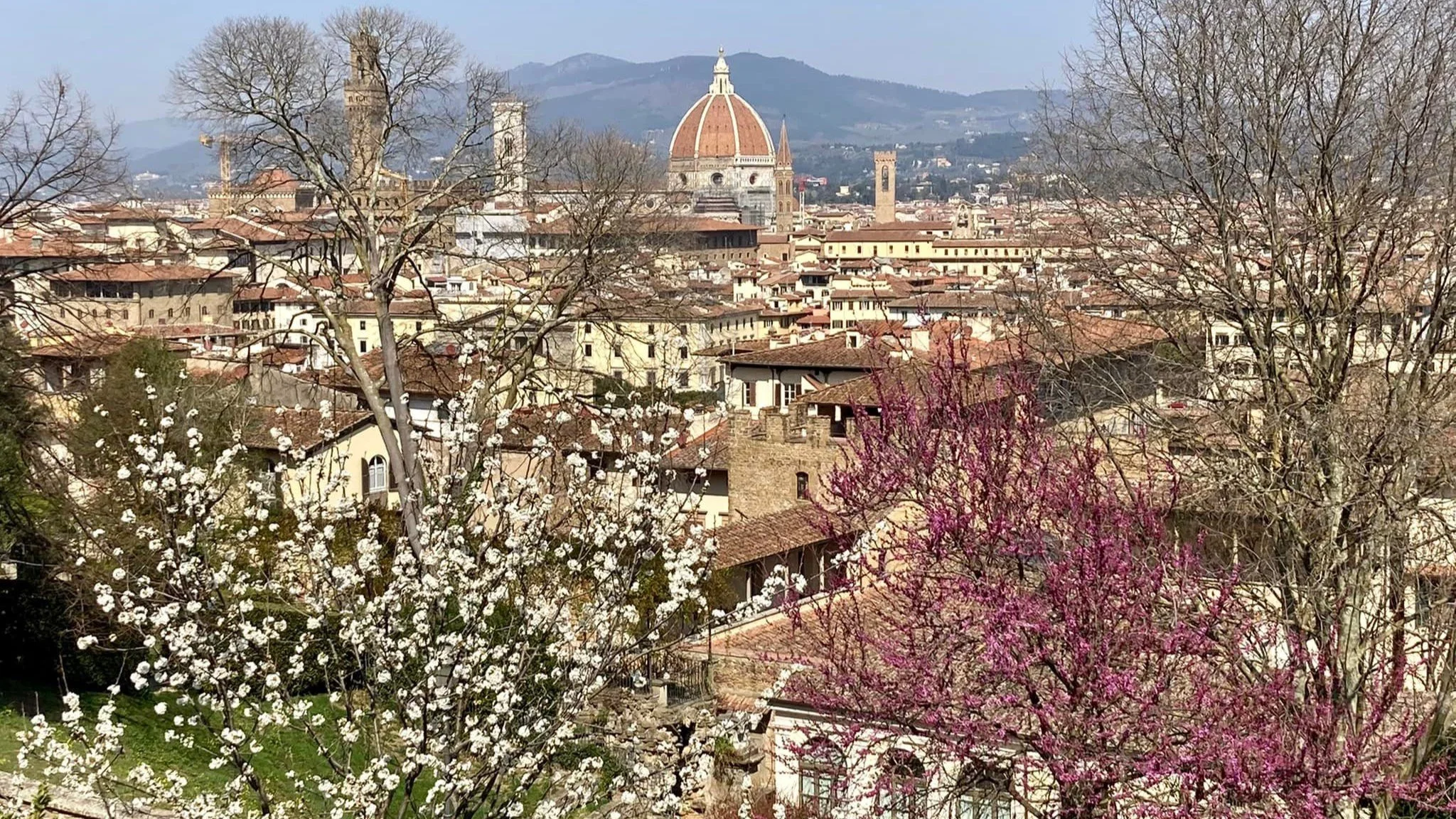
Spring in Florence, view from the Giardino Bardini
I have stood in the orange groves of Rome, in the welcome warmth of a January afternoon, and walked through the froth of early blossom in the orchards and terraces of the Boboli, and Bardini Gardens in Florence. We visited just after the end of lockdown, when the spaces felt unusually open, almost held in suspension. Those gardens are expansive, composed on a grand scale with long views, terraces and water that is disciplined into fountains and channels.
But the gardens we have come to love in Venice are different. They are quieter, more contained. They do not always announce themselves.
It is in these spaces that the idea of Venice as a city attempting to master time, tide and environment, seems, briefly to loosen its grip. Some gardens are formal – enclosed, designed and carefully maintained – but others feel as though they have simply taken hold where they can. A windowsill overspills with trailing flowers. Jasmine traces its way up a wall. An oleander leans, almost precariously, towards the water, as low as it dares.
They are intensely seasonal, and never entirely predictable. Alive, despite everything: flood, brackish water, heat, humidity. Alive in defiance of them, perhaps.
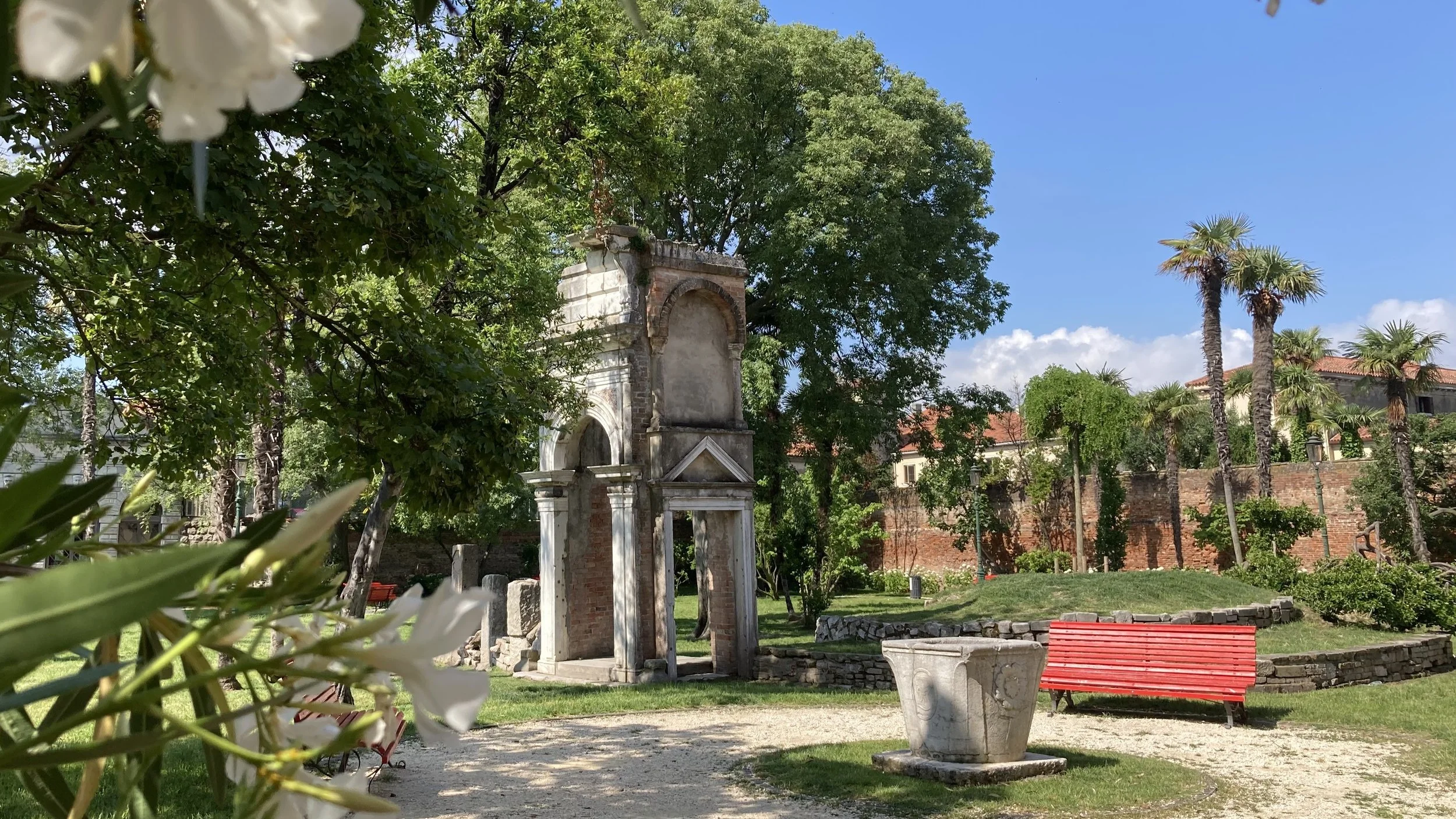
Parco di Villa Groggia, Venice
It is in these quieter corners that the atmosphere of the city shifts most noticeably. These deliberately shaped pockets of stillness are held against water in a place that is never quite still. You can sit in a Venetian garden and find a surprising intimacy, even with voices passing just beyond the walls, even with footsteps close at hand.
There are gardens you do not find unless you are looking slightly to one side of things. A gate left ajar. A wall that seems to hold more than it reveals. A brief alteration in light. After the movement of the calli and the constant negotiation with water, stepping through feels less like arrival and more like a subtle adjustment of time. The air settles differently. Sound softens. What the city casts outward in stone, tide, and passing voices, gathers here into something quieter, and more contained. I find myself lingering, not because there is anything to see in the usual sense, but because these spaces seem to ask for a different kind of attention altogether.
A corner of a campo. A pot placed just outside a doorway. Looking up, you notice the altane, the high wooden roof terraces, and the window boxes suspended between sky and stone. From the small intimate canal-side garden of Hotel Ca’Nigra, to the deep shade and older trees of Giardini Papadopoli in Santa Croce; from the more local, lived-in spaces of Parco Savorgnan and Parco di Villa Groggia in Cannaregio, to the wider public stretches of the Giardini della Biennale and the Giardini Reali, and beyond them, the gardens that open out across the water of the Giudecca – each holds its own variation of enclosure and release.
Of all of these, though, it is the Reali we return to most often. We pass the gates, and if they are open, we go in. In winter when everything is pared back, in autumn when the fog settles low, in the brightness of June, or on a clear spring day.
For all its formality, the repetition of green, the careful gravel paths and the discipline placed upon its visitors, it is still the quieter edges that draws us. Places where you step aside from the city without ever quite leaving it.
We always go to see ‘the General’. He has been in bloom on every visit – February, Christmas, June…I still hold out hope that I might coax something of him into life at home in North Wales.
It strikes me, each time, that in a city shaped so completely by water, these small, enclosed gardens offer another way of holding the world in place. Briefly, and with care.
I wonder where that place might be for you.
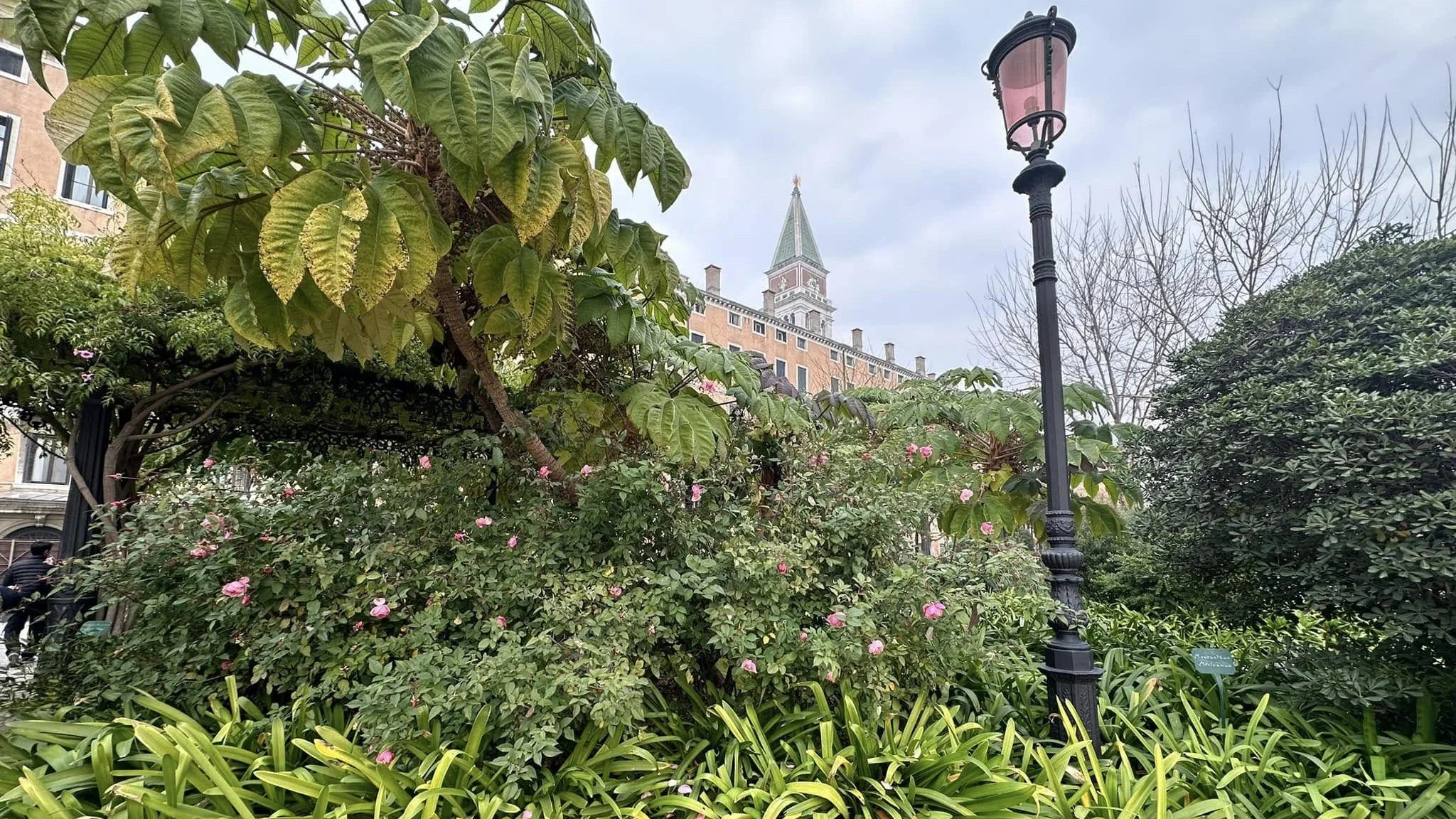
Giardini Reali, Venice