The Garden That Follows the Land
From Dorset’s soft folds to Wales’s wild slate, finding home in flowers.
Gardens as Emotional Mirrors
The first gardening magazine I remember picking up, around 2003, laid out gardens as if they were fashion spreads asking ‘what’s your garden style?’ Cottage garden, Mediterranean, jungle, or formal Italian (not that I knew what that really was). I knew instantly where I belonged though, with the cottage garden. Wild roses climbing, foxgloves spilling, herbs mixed with daisies and vegetables, a sense that the garden itself had grown up alongside its keepers. It felt like a home for the heart as much as the eye.
Living in Dorset, that feeling found a perfect echo in the landscape. I grew up cradled by soft, flowing hills, by river valleys and small villages tucked into the folds of the land. Hidden coves caught the light in the evenings, and even the wild, windblown beaches had a comforting rhythm. My gardens there had meandering paths, abundant flowers, their colours soft and warm, feeling like a natural extension of that gentle world. It mirrored the way the land held me, a quiet reassurance that I could inhabit both garden and place without strain.
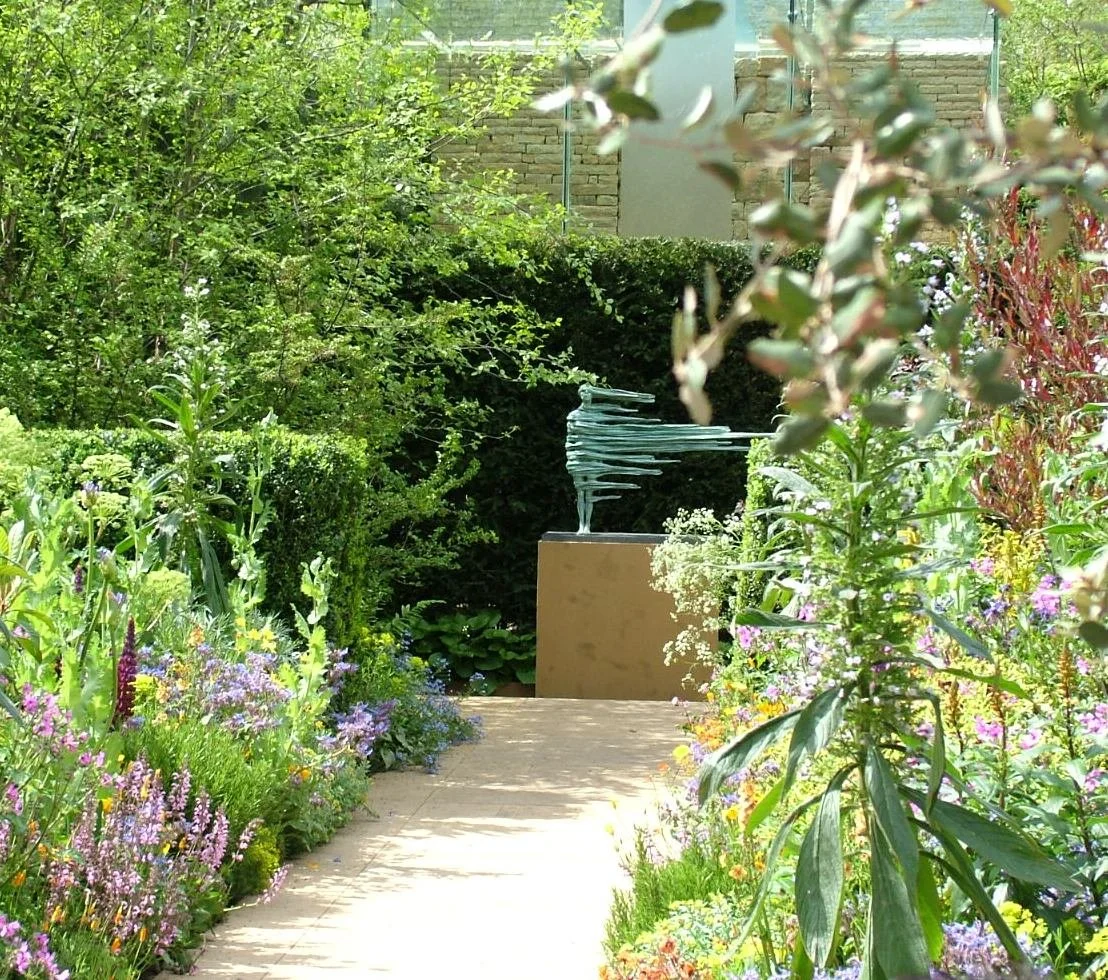
A garden that I responded to emotionally, at Chelsea Flower Show 2013
When I moved to Wales, the landscape had a different story to tell. Huge slate mountains fell sharply to the restless grey sea, and at first, I felt a little defeated. The land seemed uncompromising, almost defiant, and my cottage-garden instincts, so comfortable in Dorset, did not translate easily. But gardens, I’ve realised, are emotional mirrors. They reflect not just who we are, but how we meet the land we inhabit. The challenge became listening: what could this wild, dramatic terrain hold? How could I carve a space of intimacy and joy in a space surrounded by traffic and infrastructure, without pretending it was anything other than itself?
Elements of cottage gardening - abundance, informality, a sense of stories unfolding in flowers - are, I found, surprisingly portable. Here, they take subtler forms: a riot of perennials tucked beneath native ferns, a path that meanders rather than marches, a choice of colour that echoes the hillside rather than competing with it. The garden doesn’t replicate Dorset; it responds to Wales, translating a sensibility rather than a style. It is my cottage garden in spirit, not in form. And I’m winning with the roses, but unexpectedly losing with the lavender, which you would expect to thrive in the poor, thin soil.
Gardens are mirrors in another way, too. They reflect our emotional responses to space. How we feel in order, in wildness, in colour, in scale. Cottage gardens can evoke nostalgia, intimacy, softness. Mediterranean gardens offer clarity, sunlit order and perhaps a recollection of a holiday feeling. Jungle gardens immerse and overwhelm, while Italian formal gardens speak of rhythm, control, and grandeur. The moment you step inside, your body responds, often before your mind has caught up, to textures, shapes, and the way light moves across leaves.
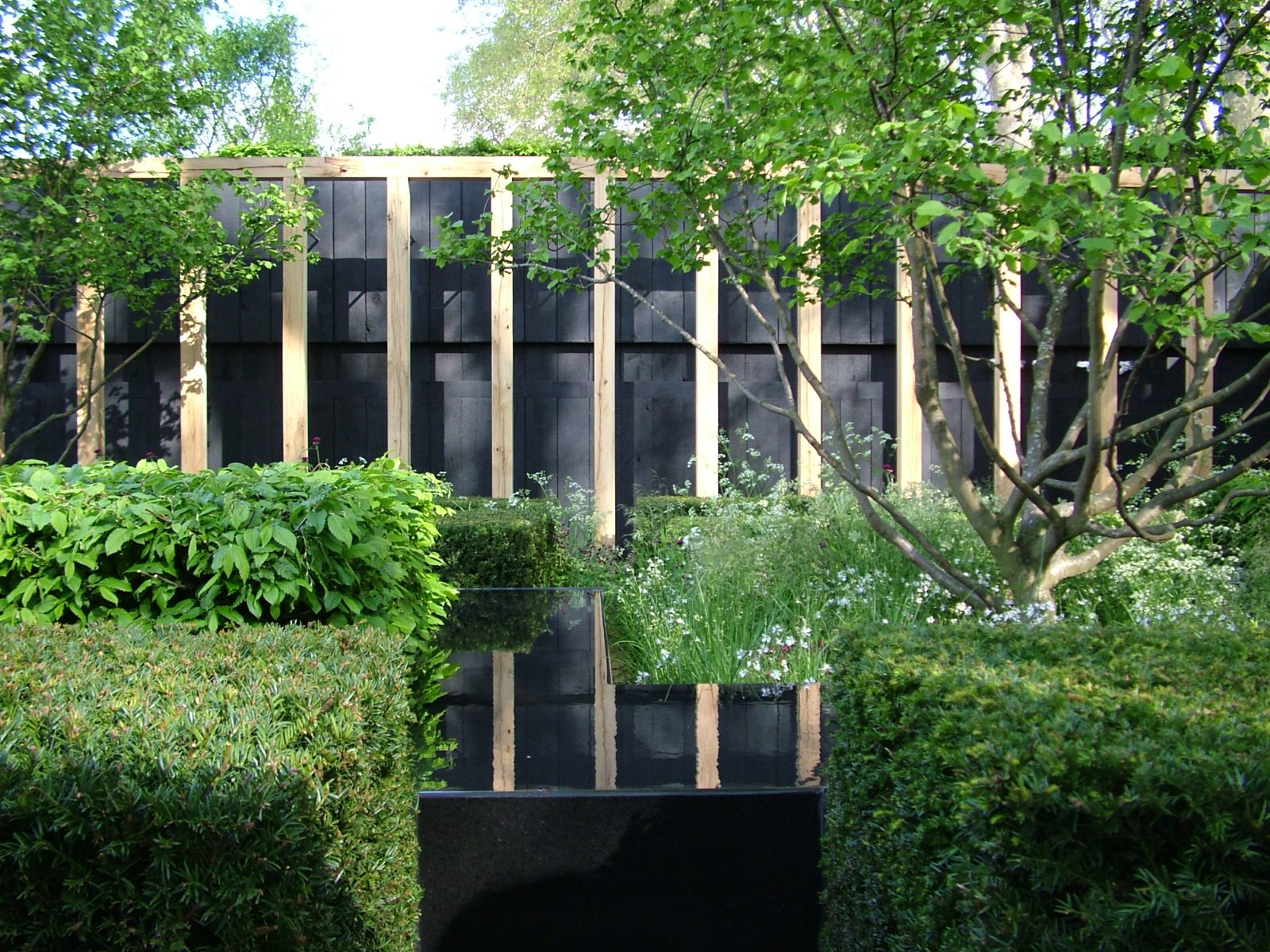
Another Show Garden from Chelsea 2013, I see the beauty but it’s not for me
I have come to think of garden styles less as templates and more as vocabularies for emotion. The land may demand a different explanation, but the vocabulary, our love for flowers, our delight in wandering paths, our joy in creating small moments of beauty, remains ours to deploy. Even in the dramatic folds of Wales, where slate mountains press to the sea, a garden can cradle, surprise, and delight. It just asks that we listen first, then respond.
Perhaps what matters most is not the style we adopt, but how it resonates with the landscape, and with ourselves. Which garden makes your heart lift? Which plants whisper ‘home’? Style is just a vocabulary; the emotion is the language. And it is in that language, wherever we live, that a garden becomes truly ours.
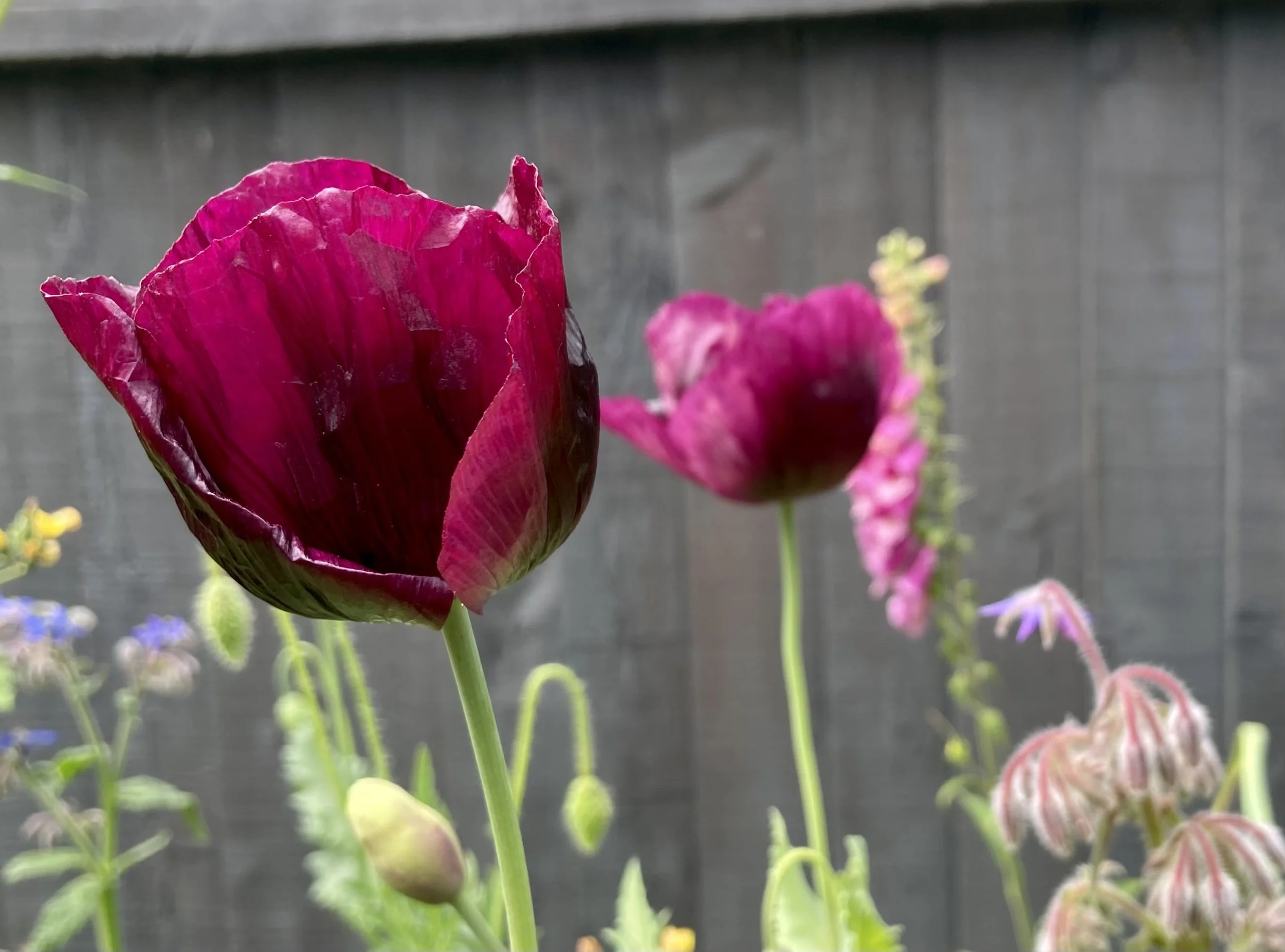
At home with my favourite Poppy: Lauren’s Grape