Postcards and Personal Journeys
How Other People’s Journeys Became Part of Mine
There is something intimate about a postcard.
Not just the image on the front, the sunlit piazzas, ruins, bridges, impossibly blue water, but the fact that someone stood there, chose it, turned it over in their hands, and thought of someone else. I have always collected postcards, and perhaps more than that, I have collected other people’s journeys.
Some people find looking through someone else’s holiday photographs unbearably dull. I never have. I want to know where they stood, what the air smelled like, whether the café on the corner was any good, whether the sea was really that colour. I like the ordinary details as much as the grand landmarks.
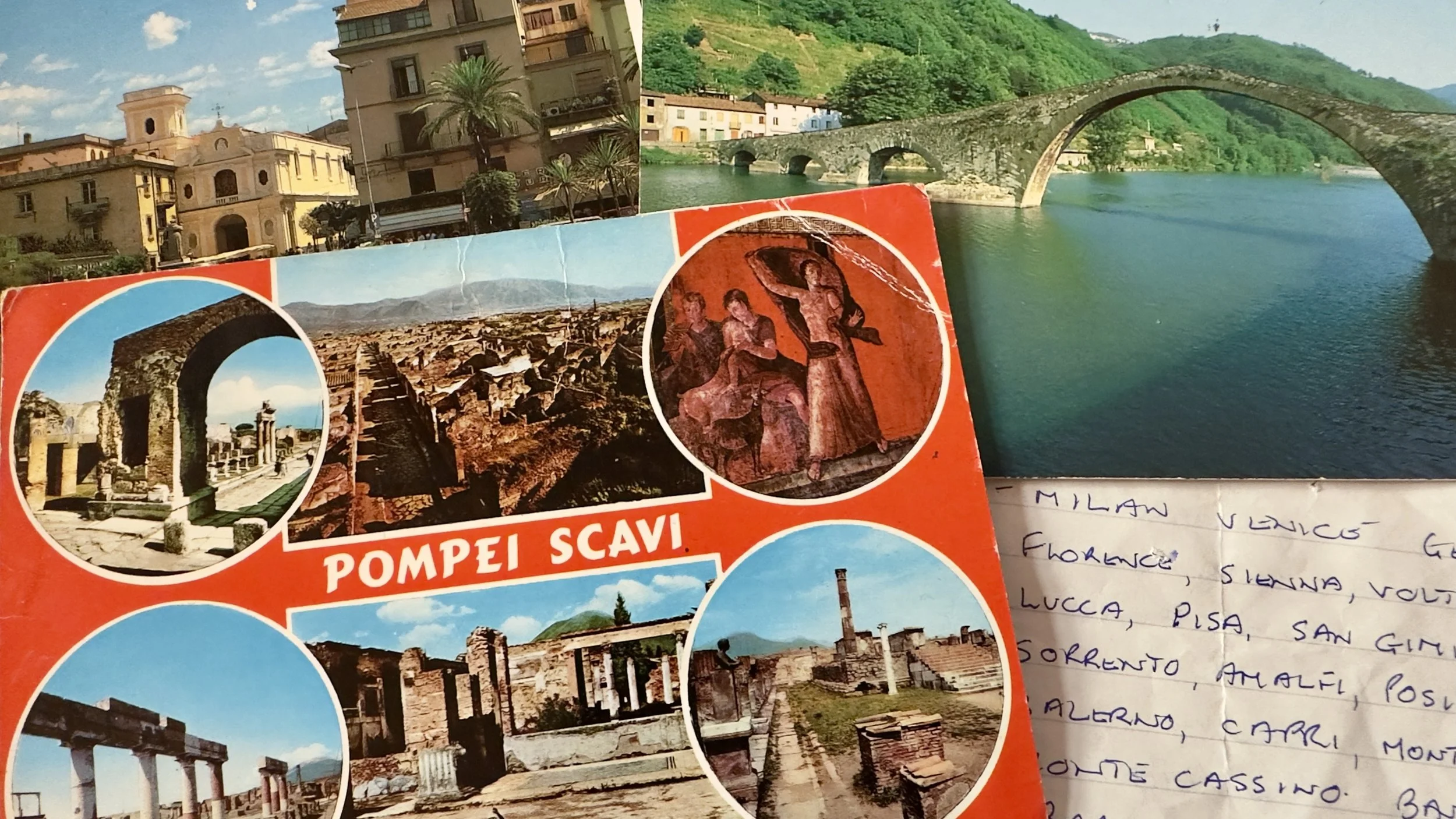
The first postcards from Nan and Grandad with stories of fireworks over Lausanne, balconies full of flowers, opera concerts and lovely food.
Maybe it comes from growing up working class, where foreign travel belonged more to brochures than to real life. I didn’t go abroad until I was a teenager (even then that was with school, not family). Europe existed first as something imagined: glossy and sunlit and just slightly out of reach.
My grandparents, though, travelled every year by coach on determined pilgrimages across France, Italy and Hungary, the then Romania and Yugoslavia, with practical shoes and careful packing, postcards sent home and stories brought back in instalments. I loved when their holiday catalogues arrived. I would sit for hours turning the pages, studying photographs of Venice, Florence, Pompeii as well as the palm fringed beaches and exotic cities of the middle and far east - places that felt almost mythical to me then.
The nineties added another layer to that dreaming: travel television. I loved watching Lonely Planet and seeing Magenta Devine in her signature dark glasses on Rough Guide, making the world feel both glamorous and gloriously attainable. Those programmes fed the same hunger as the brochures and postcards and the sense that there was always somewhere else to discover. I have since bought more guidebooks than I could ever justify.
I still think of Magenta’s take on Milan whenever I arrive at Milano Centrale, stepping off the train onto that most unglamorous end platform, often into a cloud of cigarette smoke, surrounded by airport arrivals and tired luggage. It is hardly la dolce vita, and yet somehow it always feels like the true beginning - the first real breath of Italy before the city rearranges itself around you.
I remember standing in my Nan’s kitchen once, full of that quiet longing to go somewhere beyond what I knew, and she said to me, “You’ll be able to travel when you’re older.” At the time, I thought she was simply saying something kind to placate me, the sort of promise adults make because they can see your wanting before you can name it yourself.
But she was right.
My first trip to Italy was for work, and somehow that imagined place became real. Now, in just a few days, we’ll return again to Lombardy and the Veneto, places we’ve returned to time and again. Such is our love for Italy: not just for the beauty of it, but for the feeling of recognition, of returning to somewhere that once existed only in postcards and catalogue pages.
Even now, I keep postcards like small reliquaries. A stamp from Sirmione. A faded view of Pompeii. A bridge whose name I learned. They are fragments of someone else’s memory, but somehow they become part of mine too.
Perhaps that is why I still love them. A postcard is proof that someone was there, and for a moment, they invited you into the story.
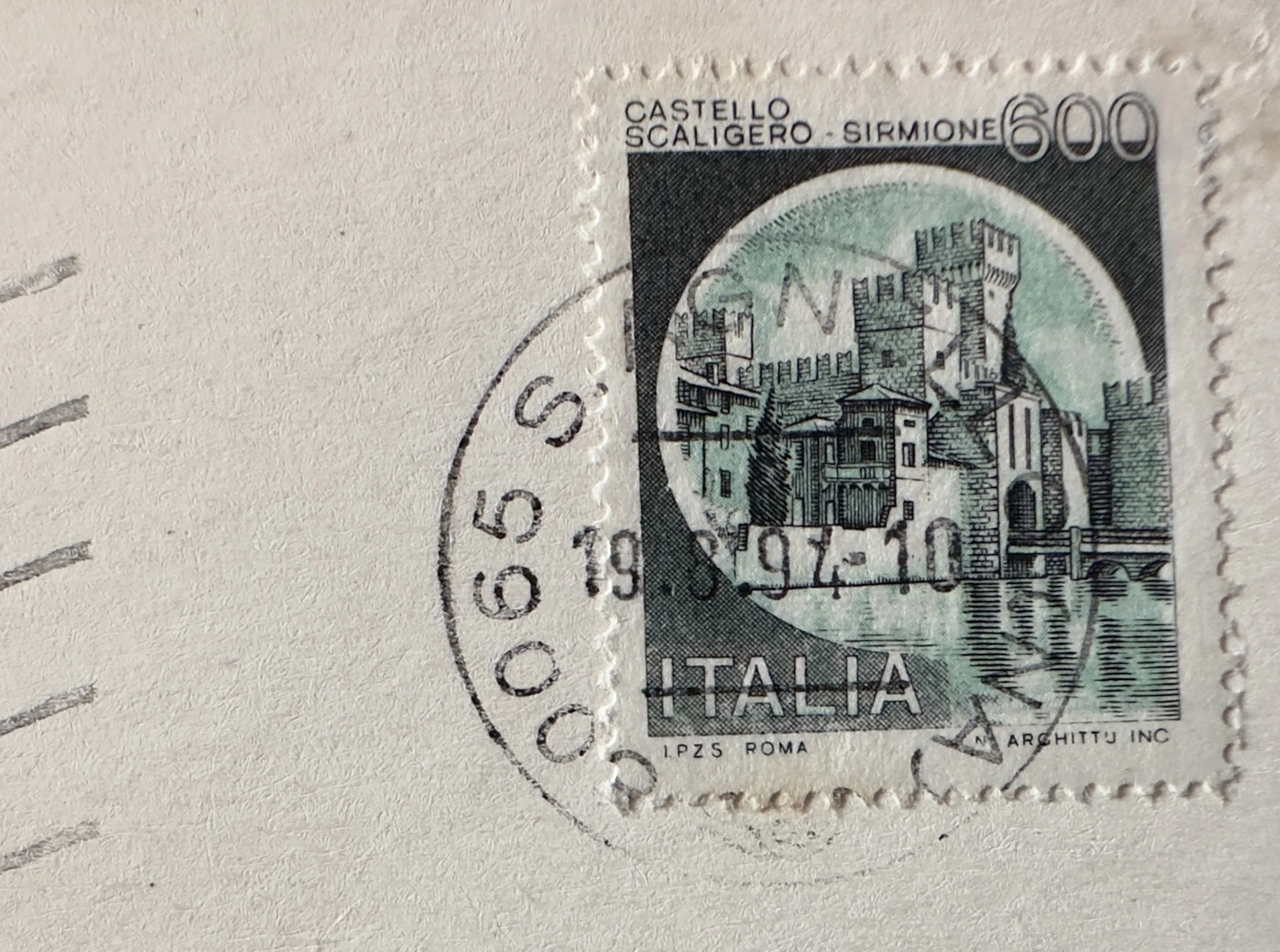
19.08.1994