Tarot and Tides
Two exhibitions, and the old human search for meaning: TAROCCHI. Le origini, le carte, la fortuna (Bergamo) & Etruschi e Veneti. Acque, culti e santuari (Venice).
The Tarot exhibition at Accademia Carrara in Bergamo feels like a journey through the entire life of tarot, from a luxurious Renaissance card game played in noble courts to the rich, mysterious and creative world tarot has become today.
What makes it especially extraordinary is the reunion of the Colleoni Deck, the most complete surviving ancient tarot deck in the world. After more than a century apart, most of the cards have been brought back together in Bergamo from collections in Italy, New York and private hands. That alone feels quite magical.
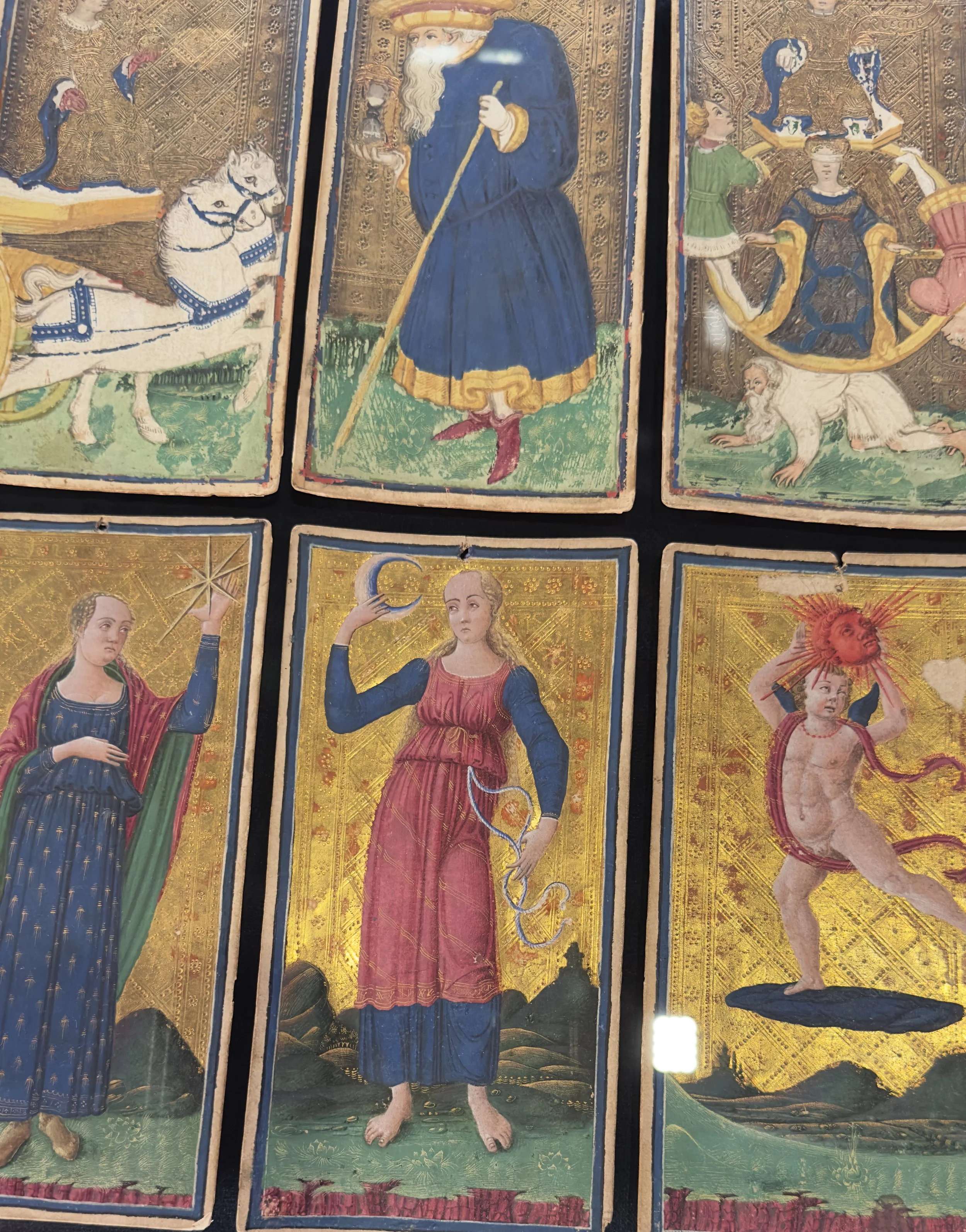
The exhibition then unfolds across seven centuries, exploring how tarot evolved over time: who commissioned the cards, who painted them, how they were made, and how their meanings shifted through the centuries. Originally they were simply an aristocratic pastime, but later became tied to divination, symbolism and the occult imagination, eventually finding their way into modern art and contemporary culture.
I love that the exhibition seems to treat tarot not just as fortune telling, but as a mirror of human imagination and storytelling. There are connections to Renaissance art, Petrarch’s Triumphs, Surrealists and modern artists like Leonora Carrington, showing how these strange symbolic cards have continued to inspire people for hundreds of years. It was like stepping into a long thread of myth, symbolism, creativity and mystery that stretches from medieval Italy right into the present day.
From the thunderstorm-soaked Piazzas of Bergamo to the sunlit Piazza San Marco in Venice:
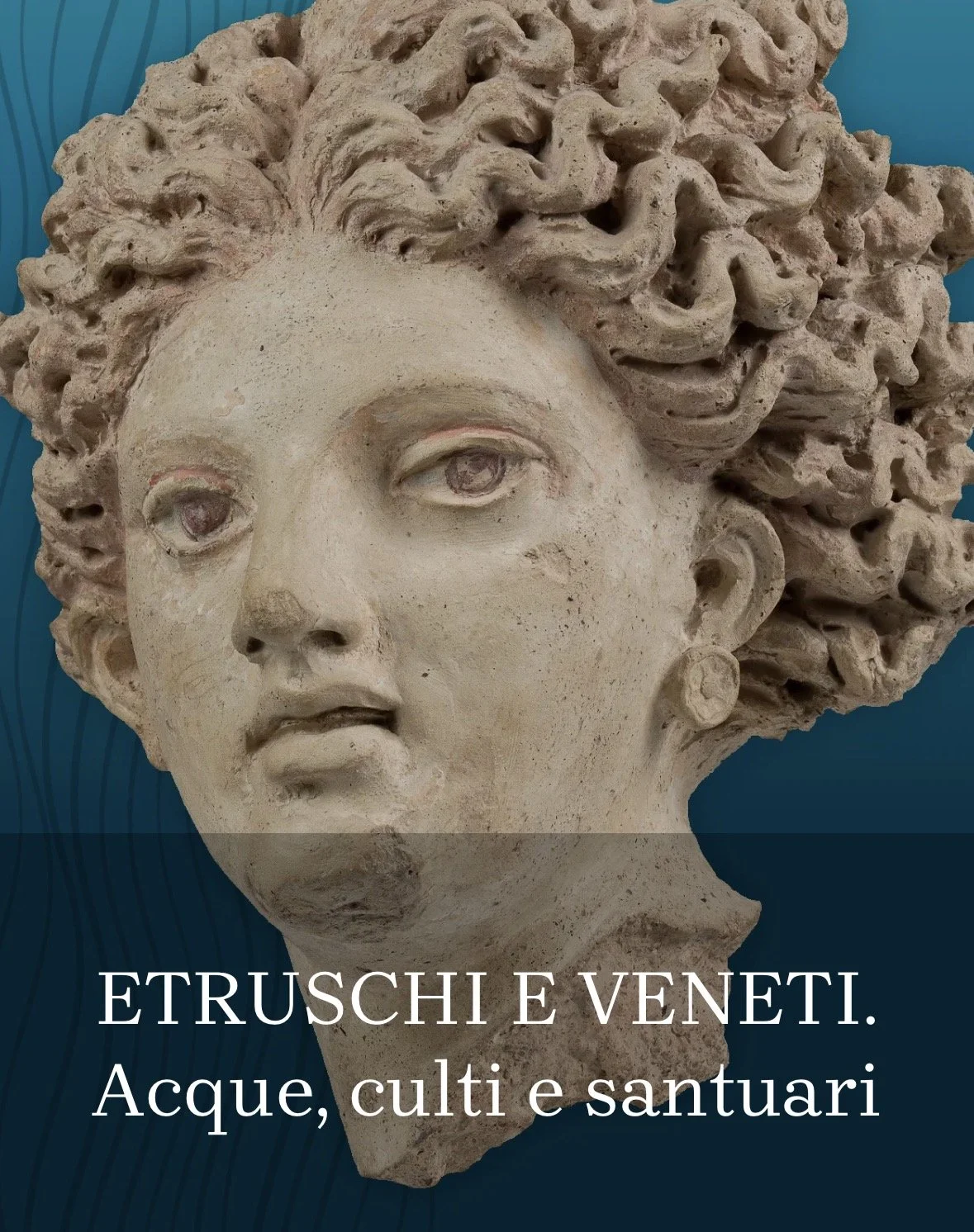
What really struck me about this exhibition at the Doge’s Palace was how deeply water shaped the spiritual world of both the Etruscans and the ancient Veneti. Seas, rivers, springs and lagoons weren’t just part of the landscape, they were sacred places, tied to healing, ritual, travel and connection.
The Etruscan side of the exhibition moves through ancient port towns, thermal sanctuaries and spring sites, from the Tyrrhenian coast to the Po Valley and the Adriatic. There’s a strong sense that water was seen as both practical and mystical. A place for trade and movement, but also for worship and restoration.
From there, the exhibition flows into the world of the ancient Veneti, where thermal waters, river sanctuaries and sacred springs again take centre stage. I loved the connection between healing waters and local deities, especially the sanctuary dedicated to Reitia, goddess of the river. There’s also something fascinating about Altino, the lagoon port that became a meeting point for cultures and travellers arriving across the Adriatic and Mediterranean. It feels like a very early reflection of Venice itself - a place shaped by water and by the people drawn to it.
The exhibition finishes by bringing everything into the present day with ‘We are bodies of water’, an audio-visual installation reflecting on the fragile ecosystem of the Venetian lagoon. That thread between ancient ritual, water, healing and the living lagoon today feels especially powerful.