The Apple Tree by the Road
On last year’s apples, this year’s blossom, and the hope of cider
The apple tree by the road hasn’t been pruned this winter. Whether that’s reluctance on my part to assert too much authority over it, or simply a case of the Welsh weather getting the better of us again, it is hard to say. It’s looking a little confused and very forlorn.
Beneath it the remains of last year’s fruit are still scattered in the grass and in the borders. Fruit that no one gathered. Apples now full of tiny insect holes, half whole and half mushed into the soil, only just recognisable as apples. From a distance they look almost like abandoned toffee apples. The tree looks undecided about the year ahead. Its branches are bare enough to see the traffic through them, though the buds are beginning to swell if you look closely.
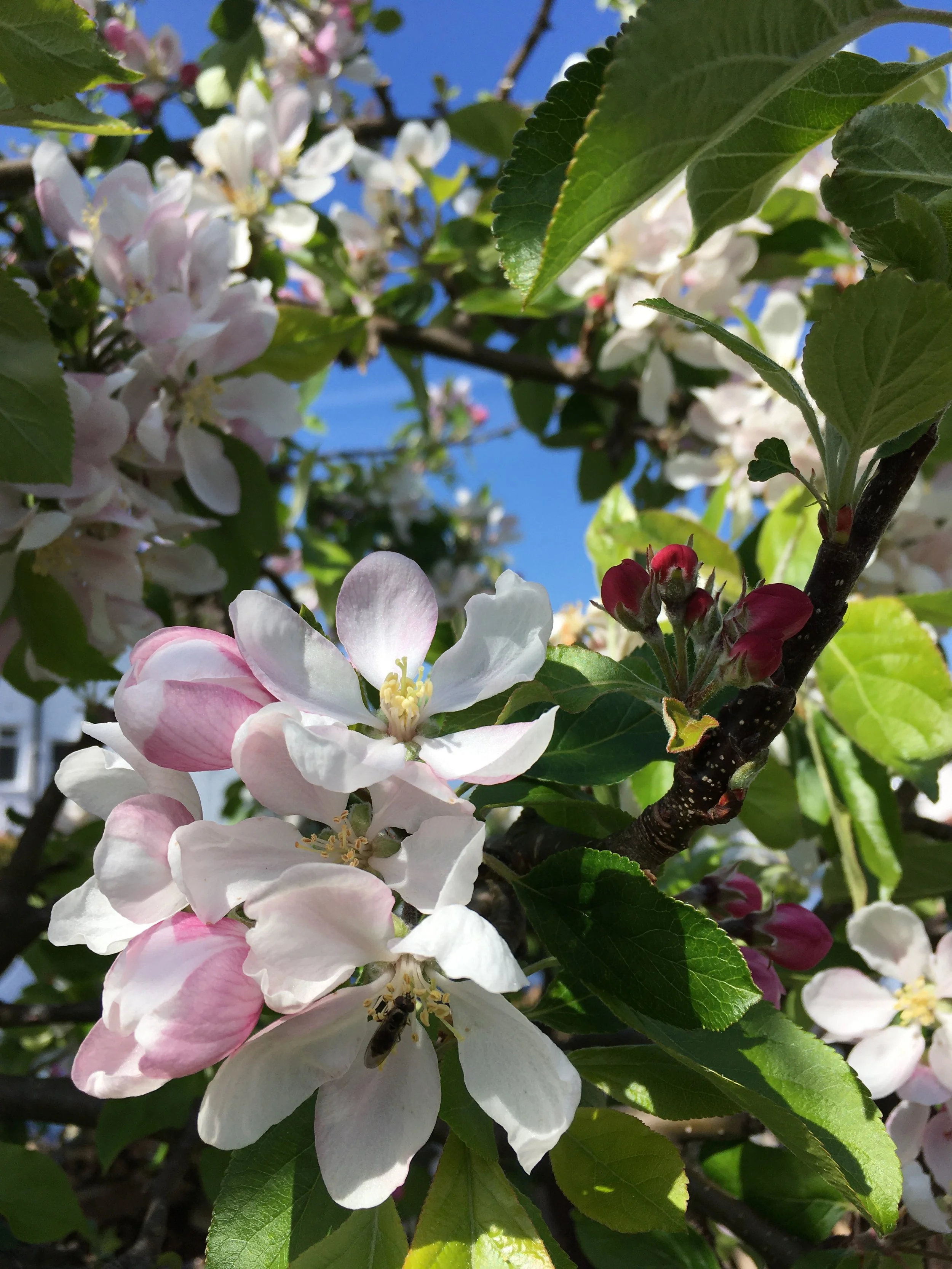
The cherry blossom has appeared just across the garden attracting the first bumble bees, which makes us wonder - as gardeners do at this time of year - whether this might finally be the year we make cider from the tree. It’s not a perfect tree. It leans slightly towards the pavement, and people help themselves to the fruit when it ripens. But we’ve grown fond of it.
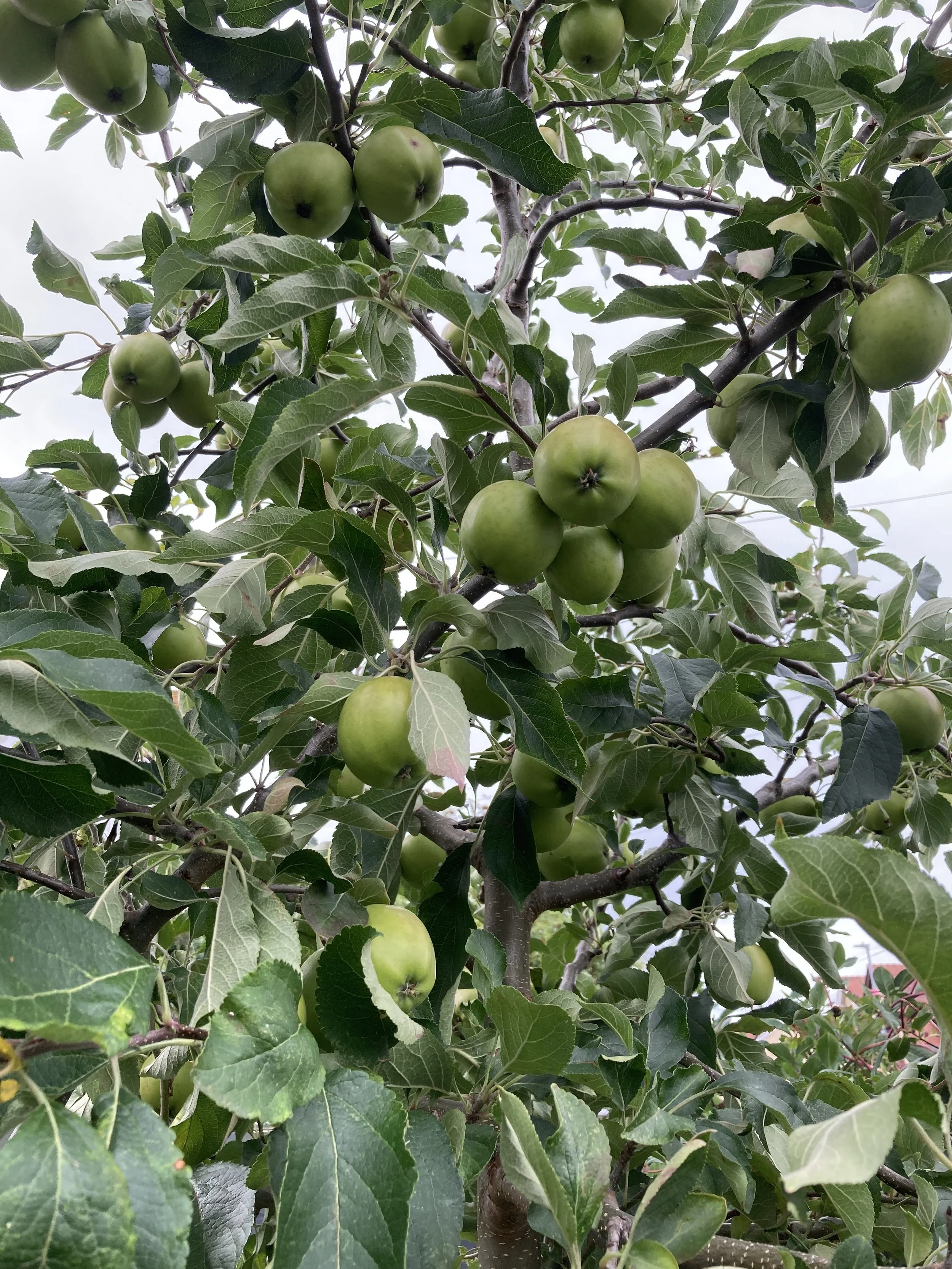
By the time I sit under the apple tree in the distant summer evenings, the grass has already held the sun for most of the day. I like to sit on a small hump of lawn beneath it, in the corner by the fence, looking down the length of the side garden. Here the warmth still rises from the lawn but the light has softened. The traffic along the road is beginning to thin and the evening air feels quieter, although the hum never quite disappears. Voices pass by on the other side of the fence, passing close but not knowing I’m even there. Above me the apples hang unevenly, some already dropped into the grass or caught among the artichokes and the onions, others still clinging to the branches.
By early autumn the apples begin to fall without ceremony. I’ve never actually seen one drop; I simply step outside and discover that several have already landed in the grass, against the wall, or occasionally rolling towards the road. It’s not quite our tree.
And not quite the street’s either.
Apple trees have a way of carrying memories with them. This tree was here long before we arrived. Before this one, there were two others planted years ago in a garden in Dorset. By late spring the ducks had discovered the shade beneath them and would sleep there through the warm afternoons, white feathers tucked neatly into the grass.
Those trees had roots in deep soil, surrounded by a landscape that had been worked by my family for generations. The inherited tree in Wales has had a harder bargain. It grows in thin soil beside the pavement, with salty winds coming in from the sea and traffic passing close to its trunk. We don’t know the variety, and in recent years it has struggled with disease. Last year, after a hard prune, the apples were edible for the first time since we’d lived here.
In Dorset I knew the names of the apple trees.
Here I know only the habits of this one; when the fruit begins to fall, how some roll towards the pavement, and which years the apples are good enough for cider.
Apple trees also tend to gather stories. There’s the old wartime song warning us not to sit under one while someone else is away, and the gentler promise in Linden Lea where the apple tree leans down low.
Trees grow according to the ground they’re given.
Some trees are planted. Others simply arrive and ask to be kept. Gardens, after all, are not only blossom and harvest but rot and return.
For now the apples from last year are still beneath the tree, slowly disappearing into the grass and borders. What remains of them is mostly holes and brown softness, the work of insects and damp weather gradually returning them to the soil. Soon they will be gone altogether.
Above them the branches are still bare, but the sap is rising. At this time of year the tree looks almost undecided, as though it is quietly considering the year ahead.
Perhaps this will finally be the year we make cider from it.
Or perhaps the apples will fall again to the pavement and the artichokes, and strangers will carry a few away in their pockets.
Either way, the tree will go on leaning slightly towards the road.
Some apples will return to the soil. And some will leave in passing hands.