Gardens carry other people with them
Inherited hedges, gooseberries by the road, and the plants that remind us of those who gave them to us. The boundaries we grow.
When the traffic begins to fade in the evening and the sun sets over the Little Orme and the grey Irish Sea beyond, I feel our boundary hedge lean towards the warmth radiating from the house bricks. The hedge wraps around the corner of the garden, in a generous curve that tracks the low stone wall to the pavement, like a cosy and protective blanket of green. The hedge is passed by hundreds of motorists, passengers and pedestrians every day on a road humming with traffic from six in the morning until gone ten at night.
The garden birds love the old hedge. They flit around it all day. On this busy road it is one of the few green patches left, a stepping stone to the gardens further inland and away from traffic. Often, we hear the birds before we see them. The hedge stops at the gateway, then the low grey stone wall continues straight up the road, parallel to pavement and gutter, providing the frontage to the house. When we arrived, this was less a hedge, but a planting of a few gooseberry bushes and other small plants that were struggling in the shallow soil and salty coastal air.
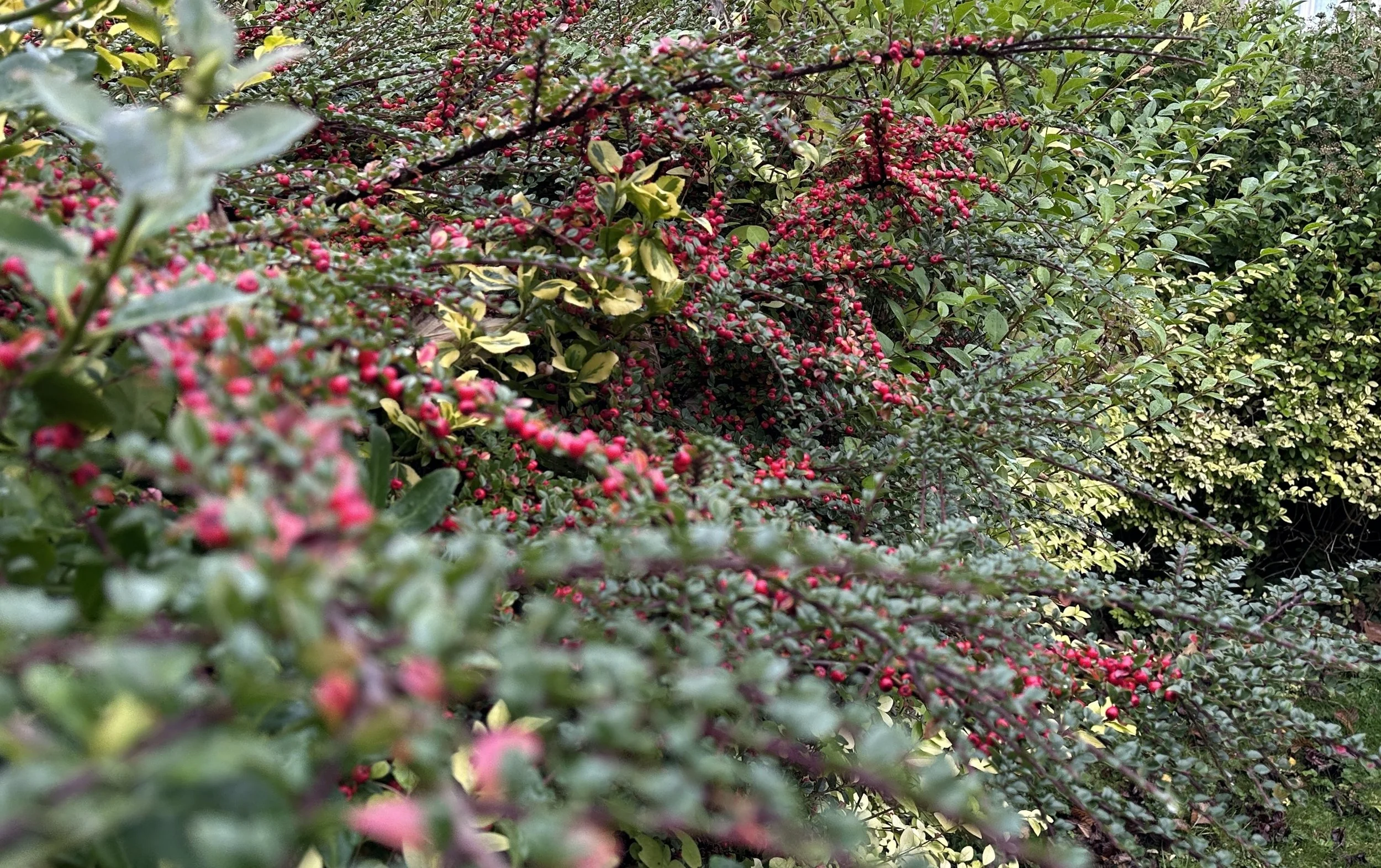
But the two hedge sections have a magical seam in the middle – the metal gate. The evergreen curved hedge is dense, healthy, loaded with cotoneaster berries in the autumn and all the colours from yellow, green and red, holding shape through the seasons. Privet, buddleia, laburnum, ivy and a prickle of bramble. The gooseberries on the other side of the gateway were always sparse, thorny and frankly unwelcoming, and unappetising from the amount of traffic that passed by less than a few meters away. That, I think was the idea - to deter intruders, and although they were not our choice, they were inherited from people dear to us.
It was one of the first gardening tasks we set our minds to when we arrived. Inside the house there was décor, furniture and objects that we could decide about in a straightforward way, but when it came to the long-lived plants in the garden, it felt like a much more delicate situation. It didn’t take much persuasion to rid the spiky acanthus by the gate, the fuchsia in the lawn that had just been planted with good intention but in the wrong place, and a successful re-homing of roses, but the gooseberries felt like they needed more negotiation. There was not going to be an argument about them, but I had to state my case with care, and some planning.
The replacement hedge would need to be up the challenges of dealing with traffic pollution, light pollution, sea salt winds, thin soil, proximity to tarmac, heavy vibration and litter, which is sadly too often tossed over the low wall from passing Co-op customers. There was all sorts of research undertaken. Walking around to see what was growing well in neighbours’ gardens, visits to the garden centre when pyracantha was suggested by the experts, and I was laughed at and warned off completely when I mentioned . . . hornbeam. My mind was set.
The gooseberries lifted out with little protest except for a couple of minor scratches; the border was dug over and weeded, and the newly arrived and soaked bundle of thin inconspicuous looking hornbeam whips were sunk into the soil within one afternoon. The surprise I hadn’t bargained for was that it was a great way to say hello to people we hadn’t met yet. Planting a new hedge invites commentary. Everyone passing by will have an opinion about it, take it from me. Although, they realised what sort of gardener I was when I replied with ‘well I really wanted blackthorn . . .’ Perhaps the saplings were planted a little close to the wall, and a little close to each other. I was expecting to lose about half of them. They all survived and have grown into a splendid signifier of the seasons.
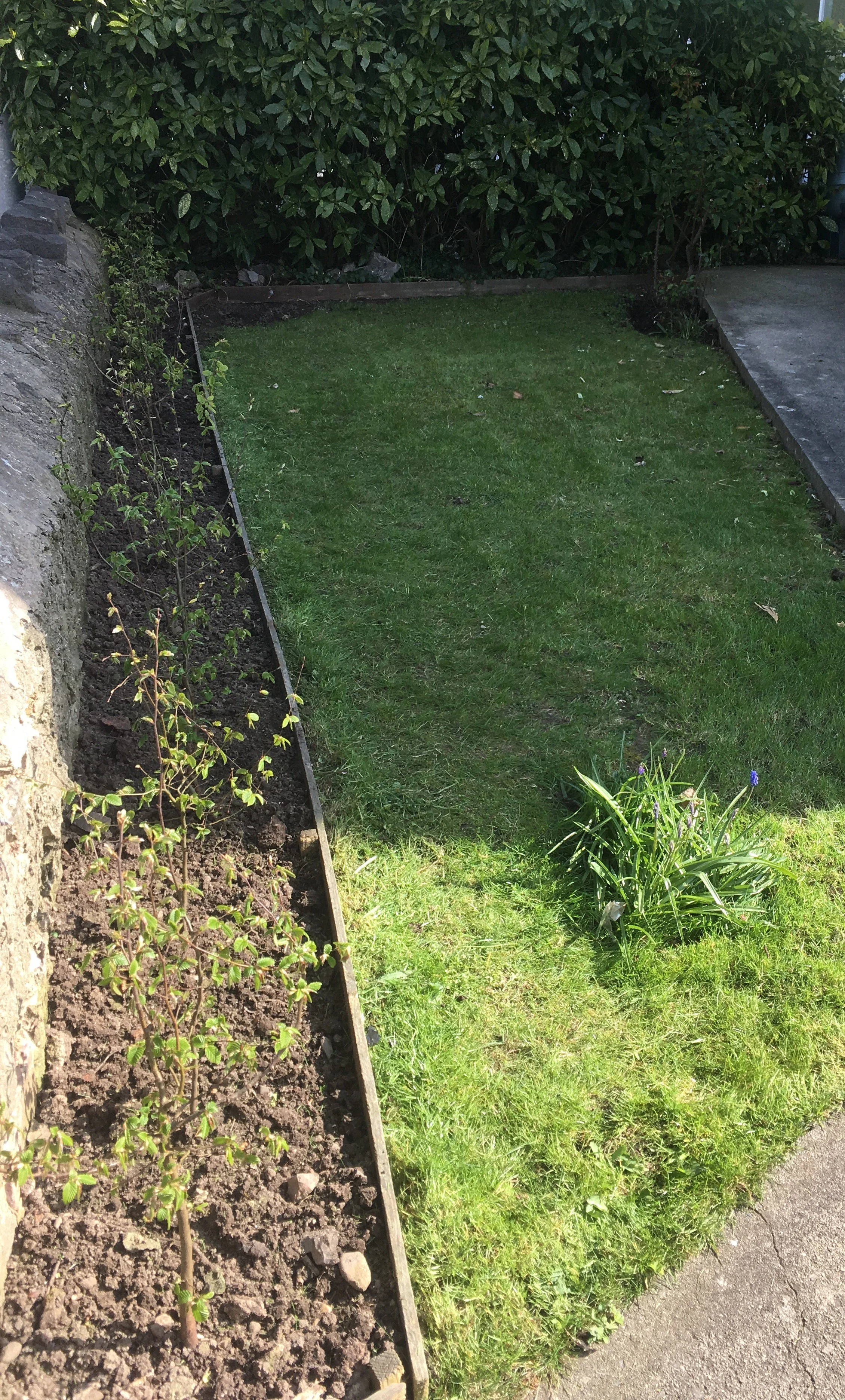
On Hornbeam-watch we’re currently observing the swelling buds and nervously wondering how much cutting back is going to be needed in the next few weeks, and looking forward to May when it looks resplendent in untarnished zesty green of the new leaves. Okay so it is a bit more unkempt and unruly than the old section of well-behaved hedge, and it’s possibly not quite the right choice. That’s why I love it. It does do a wonderful job of masking the sight and sounds of traffic (when it’s fully in leaf), and means we can fully relax in the front room with a view of the front garden, without any net curtains or blinds dimming out the light. But the bit I love most, is the seam between the old and the new hedge. Over the gate, we have trained an archway of hornbeam. Not just for whimsy, but to add some of our own character to the gateway.
Elsewhere in the garden there are cherished gifts from our move from Dorset to Wales. A buddleia cutting that was a gift from an employer, a hydrangea cutting from a friend’s garden in Cornwall, various clumps of bulbs from Mum’s garden. The roses gifted to us from other musicians give us so much joy in the summer! Then there are the plants that are purely symbolic to me – a clump of cowslips and a clump of Lily of the Valley for each of my grandmothers, both flowering in late spring and requiring a moment of pause. Then the climbing rose that has moved house with me three times, now colonising a concrete block wall (well overdue it’s prune I should add!). This garden is one of the few places where the previous owners remain present for years if you choose to let them. In the old hedge that remains, the drifts of crocosmia, the potatoes that keep turning up, the camellia under the wall and the apple tree on the corner which is a little too close to the road.
The new hedge isn’t thick enough yet for the birds to use as cover, but the boundary we’ve grown, is living on all sides, changing shape and colour in each season.
A version of this hedge appears in the fictional village of Eldercombe in my novel-in-progress, Herbs, Hexes and the Parish Council. As I type, the gateway arch still holds its shape, with crumpled copper leaves stubbornly clinging from autumn. Soon these will give way to the bright lime leaves of spring.
This boundary now belongs partly in the past, and partly to us. Every time the postman passes under the twiggy threshold I wonder who is watching. Gardens have their own quiet negotiations, not only with seeds and seasons, but with the decisions of those who planted before us.
I’d love to know if you have a plant from a cutting, or from gathered seed, that reminds you of someone else, or someone else’s garden – near or far away.
If this resonated, you can subscribe to my substack to receive these short essays every Friday.